
It is a way to identify a character, a feeling, a story.
What did you feel when you saw Darth Vader for the first time on screen? He’s shrouded in white, blinding fog, emerging out from the background into the foreground wearing all black and it’s reflective and he’s imposing and he’s terrifying and he’s mysterious. With or without the strength of the music cue, his character design says everything we need to know.
And now apply that same idea to vampires, one of the more popular concepts in the horror genre. We know that the idea of a blood sucking creature or monster represents repression, sexuality, taboo topics, death, immortality, danger, and the evolution of romanticism. I prefer vampires over werewolves, I’ve mentioned that many times on the blog, especially film and television does vampires well compared to werewolves (lightning in a bottle chances) and today, I want to combine two things I enjoy. Well, three things.
One, a favorite show is returning next week (May 12th) on AMC, which is Interview with the Vampire and I wanted to give it a little bit of a highlight here BUT two, I love costume design, art, fashion (went to school for art and art history) and I haven’t done anything like this before. If it goes well, maybe we’ll look at werewolves, witches, anything of that sort. And I hope you are able to see the visual story being presented here and have a little bit more appreciation for the hard work that goes into storytelling with costume design.
In a way this will be a film history lesson if you don’t know much about early film, especially horror and I hope you guys enjoy this. I love researching as much as I can but also pulling out references and experiences from what I’ve learned in school and being a part of the horror community online for YEARS. This will be broken down by film and television, a chronological order to help visually and spoilers beware?
Let’s do it!

FILM
 Nosferatu (1922) – The original, the first adaptation of Stoker’s work but it wasn’t approved by the Stoker estate; however, this movie is the grand poobah. It’s influential, it’s currently being remade AGAIN (there is a 1979 adaptation) and it is a part of film history. The costume work, designed by Albin Grau, is still felt today. The bald head, the long fingers and nails, the fitted coat, all of that is gothic, a bit off kilter, Victorian and along with the costume, the set design further enhances that. I believe Grau also did the set design work as well. And if you want more of that kind of set design, please check out The Cabinet of Dr. Caligari.
 Dracula (1931) – This is what I would assume people think a vampire looks like. It is THIS movie, this interpretation, for future films and Halloween costumes and props. This is the movie, the “FACE” for vampires. I know that the Broadway play was first (1924) and there are rumors that the actor Raymond Huntly may have come up with the look of a suit and cape, Ed Ware and Vera West were uncredited for the film which is a shame, because the on play look was more finalized and personalized in the film. I wouldn’t be surprised if Lugosi had a hand in his on screen appearance as well.
 Hammer (1958-1974) – I keep seeing the late Christopher Lee in my head as Dracula. And the look is very, very similar to Dracula (1931) and prior. It’s like the costume design doesn’t change all that much but is further changed and enhanced for the current period but we don’t steer too far from it. Outside the titled character, the others round out with billowing silhouettes and colors, that beginning of “lush” colors is here and perhaps a film in color is a big part of that! Molly Arbuthnot and Rosemary Burrows are listed as wardrobe and costume designer, the latter was uncredited for her work. How unfortunate!
 Blacula (1972) – Ohhhh the costume work in this film makes me feel a lot of things and I think it’s a product of its time but also referencing the iconic look of previous vampire or Dracula looks that haven’t progressed enough. Sandy (Sandra) Stewart is the designer who also did the sequel Scream Blacula Scream and Coffy.
 Ganja and Hess (1973) – This vampire cult classic film, in the midst of the blaxploitation boom of the 70s, is a juxtaposition to the movie above (Blacula). Both Ganja and Hess are dressed appropriately for the time period. They blend in, they don’t stand out. It’s purposeful in my opinion. Scott Barrie is the costume designer for this cool, underrated vampire film.
 Vamp (1986) – I mention this for one person and one person only and that is Grace Jones as the lead vampire Katrina. The costume design is Betty Pecha Madden and she uses some great pieces like the all red dress, matching shoes, a matching red wig and a painted white face but it’s what’s underneath that still gets me. And it’s the paintwork by the late Keith Haring.
 The Lost Boys (1987) – The epitome of 80s fashion and nostalgia. There’s a bad boy vibe with their looks, each being distinct but collectively, they mesh well together. Costume design was by Susan Becker who mentions that the lead actors were able to have input and pick and choose their looks. It’s grunge, punk, gritty, a bit gaudy with the textures and embellishments, but influential.
 Bram Stoker’s Dracula (1992) – Costumes designed by Eiko Ishioka, won for Best Costume Design at the Academy Awards (1992). I foam at the mouth every time I think of this movie. “… the basic color scheme for Dracula was red, white, black and gold”, “every costume was designed to be totally unique and never seen before, to cause a fresh sensation every time Dracula appeared.” Ishioka said in the moviebook pictorial of Bram Stoker’s Dracula.
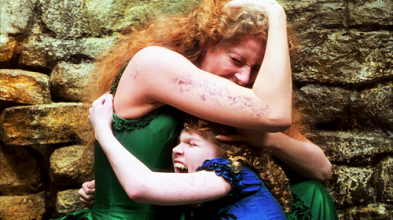 Interview with the Vampire (1994) – Sandy Powell, who also did Velvet Goldmine, Shakespeare in Love, The Wolf of Wall Street and countless films, is the one who created the silhouettes of the gothic film adaptation of Anne Rice’s first novel in The Vampire Chronicles. What I can only say about the costume work is that it’s grand, lush, the colors are beautiful and rich looking. I think between this and the 1992 film Dracula, there’s a richness that’s present. It follows through into the television adaptation as well.
 Blade (1998) – I’m so glad a move like Blade exists. I know it is a Marvel comic and it’s hard to interpret a comic to screen or even a book to screen and it takes someone who can interpret it well and it becomes its own character. The costume design is by Sanja Milkovic Hays and the character Blade (played by Wesley Snipes) and his look is military, authoritative, all black, we’re entering the LEATHER portion vampire evolution. Even Stephen Dorff is wearing leather too.
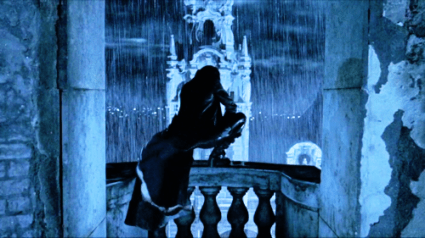 Underworld (2003) – The leather continues! Or skin tight latex? Wendy Patridge makes these decisions! Salene (Kate Beckinsale) gives me a continuation from Blade. All black, latex and leather, there is a corset fitted and leather boots. This is also around the time of The Matrix and its sequels and its impact on pop culture so you can see influences bleeding through. But we gotta mention Bill Nighy as well because of what he wears. There’s Victorian silhouettes, textures and embellishments that do read more ancient/older vampire, or the “head” of a coven.
 Queen of the Damned (2003) – Oh I think the costume work is probably the film’s saving grace. I’ll include the soundtrack cos I still bump it to this day but thanks to Angus Straithe (who also did Moulin Rouge), we have the iconic look of Akasha (played by the late Aaliyah) that I see constantly cosplayed and chosen as a Halloween costume. Also more latex and leathers.
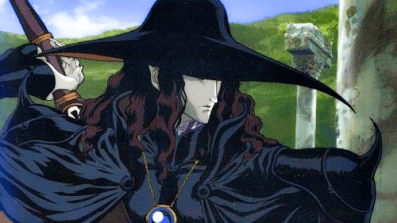 Vampire Hunter D (1983) / Bloodlust (2000) – Not in chronological order but I wanted to bring up this manga turned anime, etc. Along with Hellsing (it’s below), there’s similarities and differences of both media and interpretation. Created by Hideyuki Kikuchi and illustrated by Yoshitaka Amano (his resume is INSANE), the titular character is shrouded in darkness. Literal darkness. The color scheme is simply dark colors like black, brown and it can look like a jumbled mess. But take a look at the sharpness and stand out nature of the hat. His coat is full length, a high collar, underneath is a hint of some color of purples as a shirt or undergarment and it’s all draped beautifully. He blends in with the shadows unlike the other vampire from a manga.
TELEVISION
 True Blood (2008-2014) – Based on the best selling series by Charlaine Harris, True Blood really had a chokehold on us, didn’t it? Were you team Bill or were you team Eric? Speaking of Eric (Alexander Skarsgard), it’s he that I want to focus on a bit more. If we’re sticking with the leather theme, it’s him. His neck to shoulder length blond hair, wears black leather suit jacket and a black tank underneath. Lestat is that you?? Along with leather, Pam had a distinct style as well. Dresses of various fabrics but they were tightly fitted to her body and accentuated her frame and propped that chest up! Deborah Ann Woll was always in red, Evan Rachel Wood’s character brought brighter neutrals and a hint of glamor. Again, vampires gotta look RICH and have a uniform! Audrey Fisher was the costume designer for True Blood.
 Interview with the Vampire (2022-present) – I dream about the looks on this show and it seems that S2 is going to be better! The nod to film Lestat (when we first see Reid’s Lestat) or the all white exuberant look Lestat wears for Mardi Gras is a nod to Lucy’s burial all white look in Coppola’s Dracula, there’s so much to see and explore. Carol Cutshall does such amazing work with creating these characters throughout the many decades (starting in 1910s) (please check out her sketches) to current timeline and with season two being more centered around the Théâtre des Vampires, we’re going to see more costumes, more fantastical theatrics and continue to wonder why is Louis continually dressing in all black like he’s in mourning. I can’t talk enough about this show and I feel like it’s going to continually get better and better!
 Hellsing (1997) The year is referencing the manga creation by Kouta Hirano but I want to focus on the original anime run from 2001-2002. There is also Hellsing Ultimate, Hellsing the Dawn and connections with Castlevania. But the original anime is something that is quite magical and unique to me. Alucard (also Dracula spelled backwards) is the opposite of D from Vampire Hunter. He wears red, flauntingly being out and I wonder if it is a nod to the red colors used for Coppola’s Dracula. He wears a matching red fedora, goggles, white gloves that have seals on them to invoke power levels, white collar shirt, red tie, black fitted suit and black boots. Oh he also has pistols: one is named Casull and the other, Jackal.
Some HONORABLE MENTIONS for vampire fashion content:
The Hunger, Van Helsing, Near Dark, Monster High, What We Do in the Shadows, From Dusk til Dawn, London after Midnight (lost film), The Fearless Vampire Killers
 So what’s the big conclusion? Vampires and vampire culture (whether it’s the lore, fresh new ideas, fashion influences) aren’t going anywhere any time soon. And how influential the Universal Horror films truly are. I mean, I was thinking about this but we have a clear idea of what Dracula, Frankenstein’s Creation, The Mummy, The Bride, all look like and it’s been replicated and a staple in our pop culture so long that no matter how many times the story of Dracula is told, there’s a certain “uniform” that we recognize and abide by. I think fashion is a great way to showcase the variety of how vampires can look, whether you want them to look lush, rich, almost like upper class versus vampires who would rather blend in with humans, be unseen and not heard. And fashion is a great canvas for horror and maybe one day I’ll dive into that topic because I think it’s really cool.
How do you feel about vampires? The look of vampires? Who does them justice? What would you like to see the genre do? Leave a comment below! I’ll see you guys next week for a book review of a werewolf, a leper, a clown, a spider, terrorizing young children who call themselves loser in a town in Maine. BYE!
 Shots of Horror